1. Warranty
Q: What is the warranty period of a CRANK1 Battery?
A: All CRANK1 batteries come with a 1-year replacement warranty and an expected life of 3 years or more.



*Specifically only for CRANK1 DEALERS
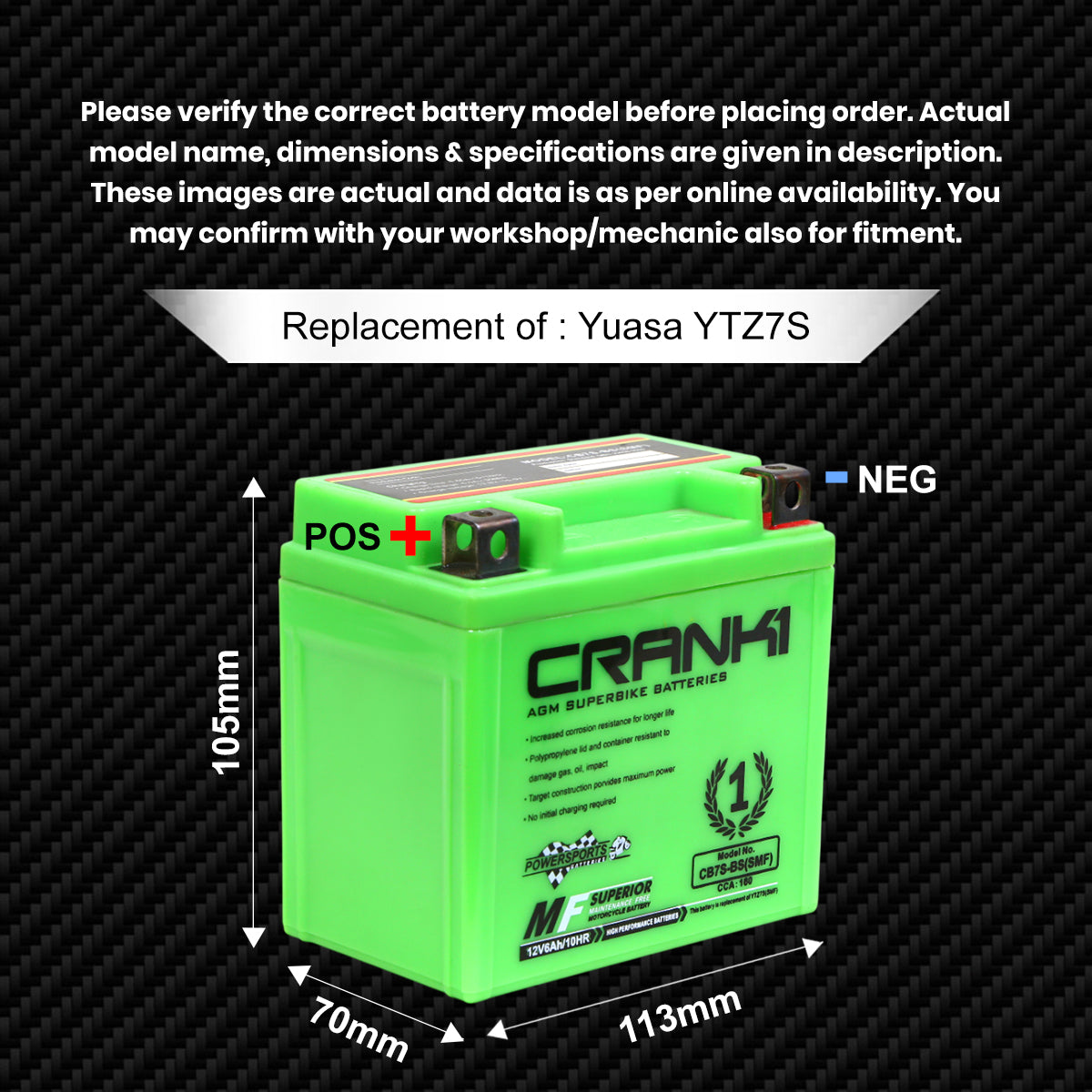
Type: SMF (Sealed Maintenance Free)
Dimensions:
Length: 113 mm
Width: 70 mm
Height: 105 mm
Capacity: 12 Volt
Amperes: 6 AH (10 HR)
CCA (Cold Cranking Amps): 160
Weight: 2.100 kg
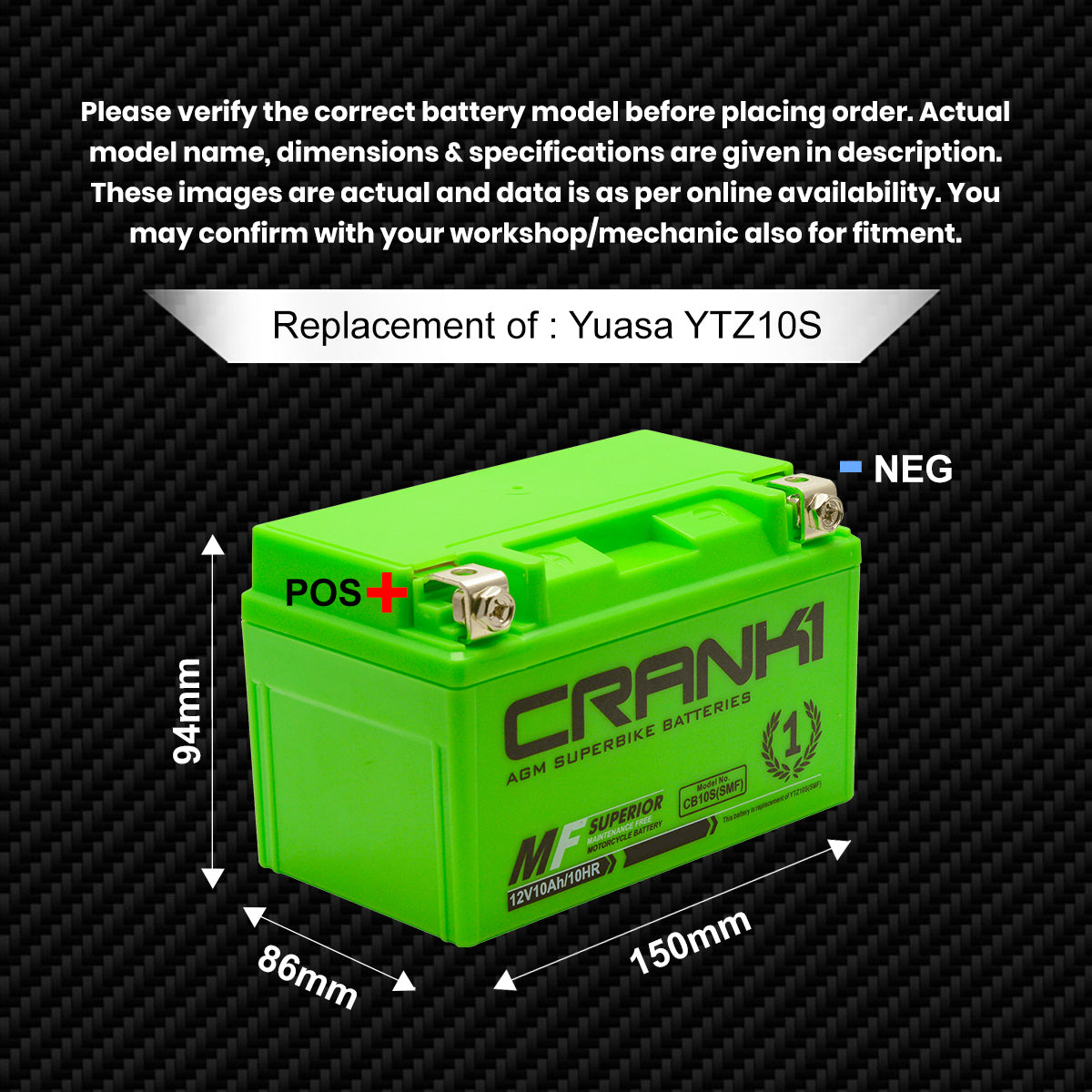
CRANK1 batteries use AGM-VRLA technology, making them 100% maintenance-free. No care is required after installation. Specially designed with high Cold Cranking Amperes, CRANK1 batteries ensure your high-CC engine roars to life effortlessly.
With OEM-size specifications, CRANK1 batteries fit perfectly without any adjustments—just like the original manufacturer’s battery. Enjoy peace of mind with a 1-year replacement warranty and an expected lifespan of up to or more than 3 years, depending on your riding pattern.
CRANK1 batteries are perfect for Ducati, BMW, Harley, Triumph, Honda, Kawasaki, Suzuki, Aprilia, Yamaha, Benelli, and more.
They deliver exceptional performance in all temperatures, from -30°C to 55°C, with 100% pre-delivery inspection ensuring reliability. Premium copper terminals ensure zero corrosion—ever.
Using unsuitable or ordinary batteries can damage your superbike’s electronics.
Choose wisely with CRANK1 for high cranking power and top performance.
CB7S-BS Battery – Replacement for YTZ7S-BS
| Bike | Applications | Year |
|---|---|---|
| Honda | CBR 1000RR | 2008-2021 |
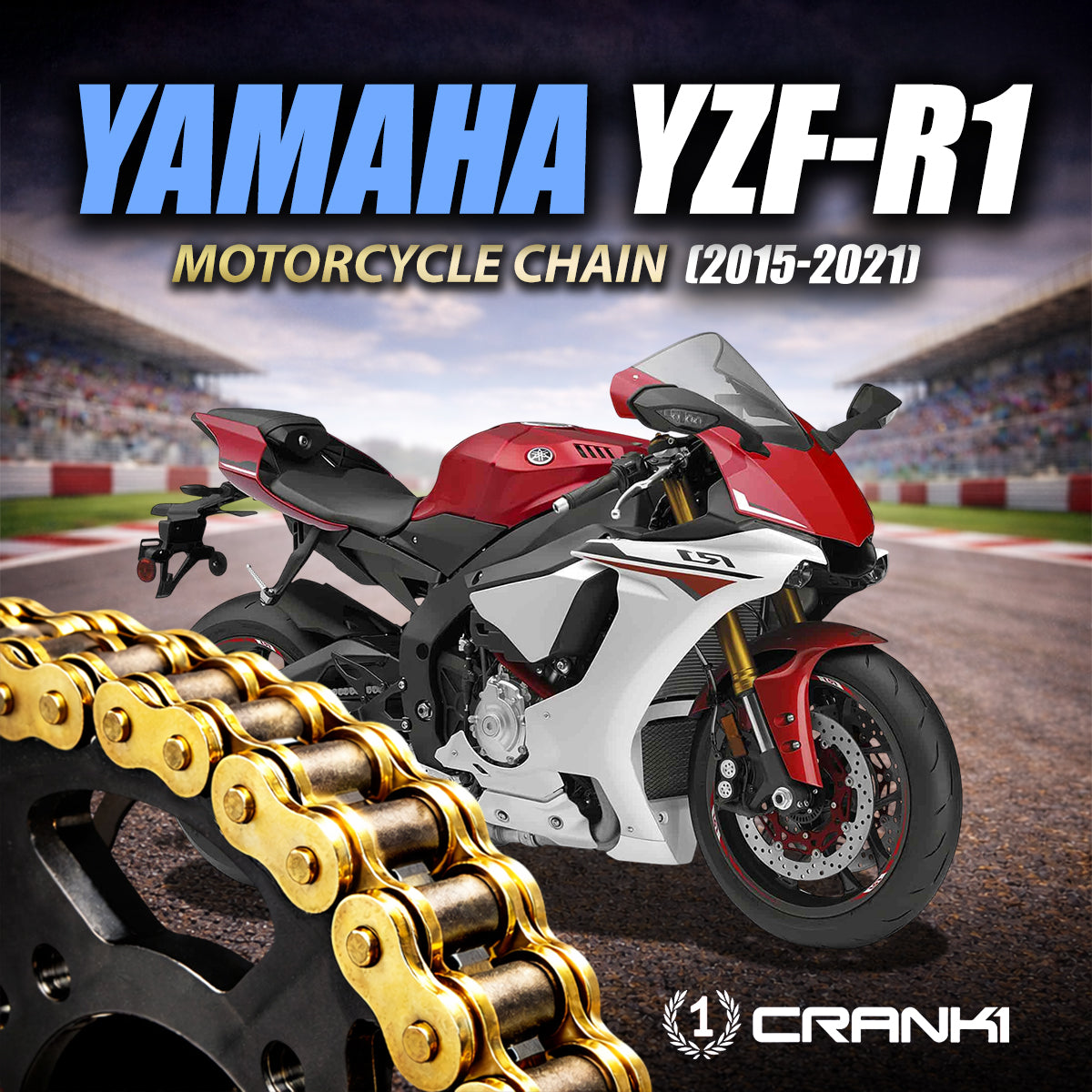
| Yamaha | YZF-R1 | 2019 Onwards |
| Yamaha | YZF-R6 | 2017-2021 |
Q: What is the warranty period of a CRANK1 Battery? A: All CRANK1 batteries come with a 1-year replacement warranty and an expected life of 3 years or more. Q: What is the life of a CRANK1 Battery? Several factors affect battery life: CRANK1 AGM Batteries: Typically last 3–5 years and often show warning signs (slow cranking, needing frequent charges) before failing. Q: Why doesn’t my CRANK1 Battery hold a charge? If a battery is excessively discharged it may only accept surface charging. AGM batteries often require higher charging voltage (16–18V). A qualified technician using an appropriate charger should test the battery before and after charging. If the battery cannot be recovered, replacement is recommended. To prevent failure, charge monthly and check for parasitic drains such as audio systems, alarms, or ECU memory. If a new battery fails soon after installation, possible causes include: Contact a qualified technician if issues persist. Charge at a slow rate of 1/10 of the 10-hour rated capacity (0.1C). Batteries self-discharge about 0.5–1% per day. Monthly boost charging prevents excessive discharge, especially in warm climates. AGM batteries can be mounted at various angles since the electrolyte is absorbed. However, model-specific angle limits may apply. Older stock should be sold first. During charging, monitor battery temperature. If hot to the touch, pause charging and resume after cooling. Discharge at 0.1C for 2 hours, then recharge at 0.1C for 10–12 hours. After charging, voltage may temporarily exceed 13.5V. Recheck after 4 hours. A fully charged battery should read 12.95–13.2V. Charging precautions: Keep away from flammable materials, ensure charger meets requirements, and monitor voltage/current. If charging current does not decrease and instead increases, stop charging immediately.CRANK1 Battery — FAQ & Maintenance Guide
1. Warranty
2. Battery Life
Climate
Usage
Application
Negative Factors
3. Charging Issues
4. Battery Maintenance
5. Early Failure Causes
6. How to Know if the Battery is Fully Charged
7. Normal Charging Rate
8. Monthly Charging Benefits
9. Installation Position
10. Installation & Maintenance Guidelines
11. Safety Precautions
12. Storage & Dealer Instructions
FIFO (First In, First Out)
Check Battery Voltage Before Selling or Installing
Long-term Storage (6–12 months)